

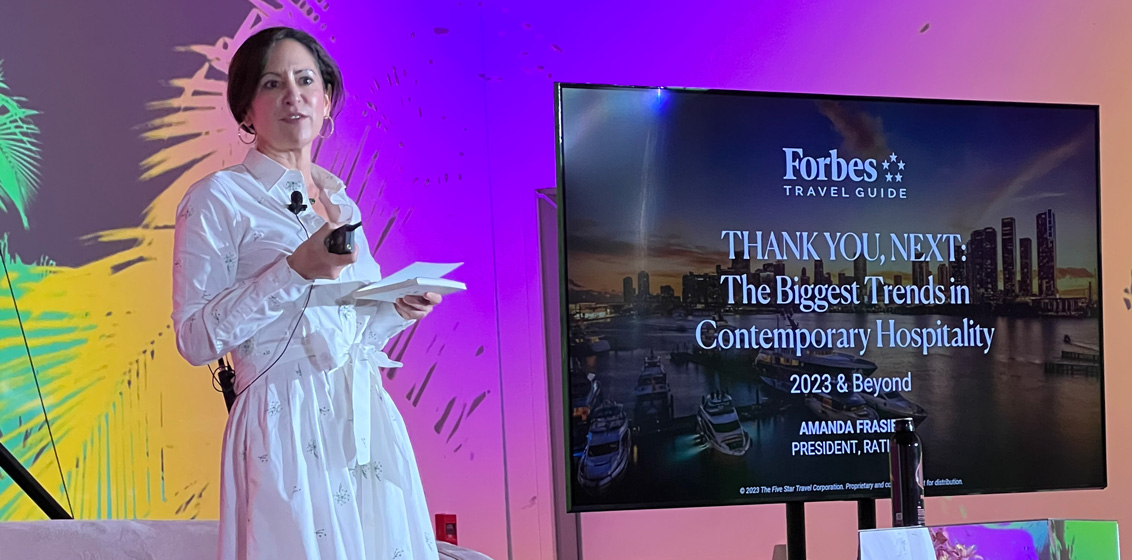
The President of Ratings for Forbes Travel Guide has encouraged hospitality companies to better uphold sustainability promises and declarations. Speaking at the bespoke luxury travel show L.E/Miami this week, Amanda Frasier said hotels and resorts that are ‘talking the talk’ should be ‘walking the walk’.
In her keynote address on the biggest trends in contemporary hospitality in 2023 and beyond, Frasier explained to conferencegoers that the advocacy group had initially met some resistance from hoteliers when, before the pandemic, the company established its own sustainability standards that it would use to score hotel and resorts that it inspected.
Frasier, who has been President of Ratings at Forbes Travel Guide since mid-last year offered insight on how the scoring system has evolved over the years, as well as the five trending focuses in the luxury hospitality space.
Subscribe to LATTE’s free eNewsletter to keep up to date with everything in the luxury travel industry.
“Luxury is evolving and the standards have changed,” she said.
Frasier referenced five of the former pillars of the scoring system. They included: a choice of magazines, including one hardcover; a chocolate on the hotel pillow at turndown; a white table cloth within a fine-dining restaurant, always having a hard copy of a menu and the requirement of a jacket for men.
“Some of these standards still have a place,” she said, noting that Forbes is working on the evolution of its standards day in and day out, and now has a refined set.She used the stage to discuss five trends of the future – Sustainability, Health and Wellbeing, Authenticity, Experience and Human Connection.
On sustainability, Frasier said Forbes had created its own set of standards, well before the pandemic, for the luxury travel industry to help navigate the topic.
Initially, when that vision was announced to the industry, Frasier said Forbes needed to deal with “a lot of pushback” and it was argued the rating specialist has “no business in the world of sustainability”.
Regardless, Forbes pushed on and created a set of standards that are aimed at helping the industry understand how it can blend luxury and sustainability.
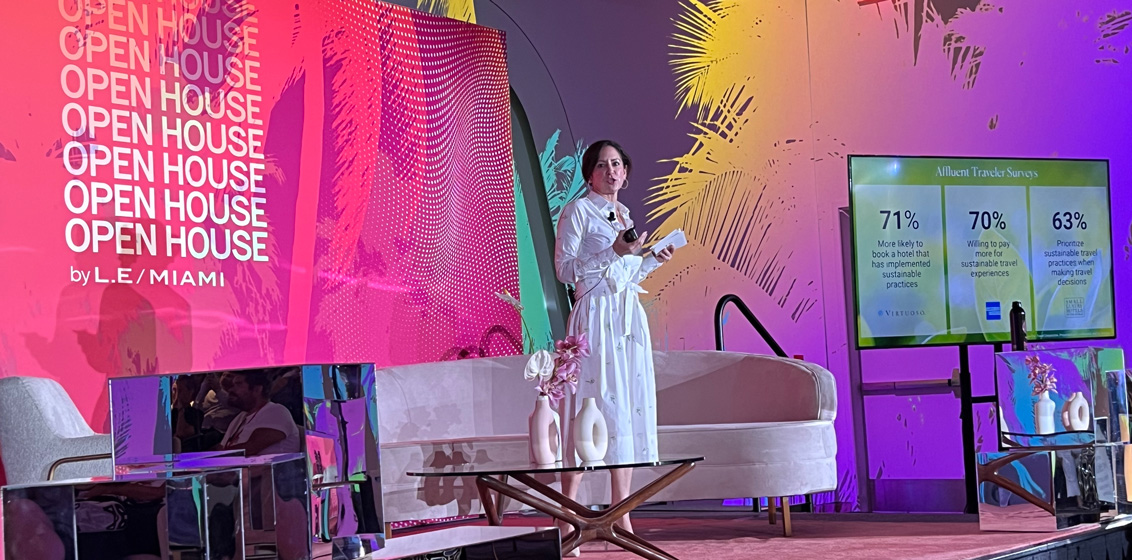
Frasier’s address highlighted the results of surveys of affluent travellers on the subject, including that of Virtuoso that found 71% were more likely to book a hotel that has implemented sustainable practices, and 82% expressed an interest in sustainable travel. Similarly, a study by American Express found
72% were more likely to choose a hotel or resort with environmentally friendly practices, and feedback from Small Luxury Hotels of the World‘s guests found 63% prioritise sustainable practices when making travel decisions.
“These are really important conscious decisions that people are making and they need to have this ability to navigate,” Frasier explained.
Among Forbes’ sustainability standards are what efforts hotels and resorts are making to reduce paper (such as on arrival and departure, and within the guest room) and amenities not being replaced until necessary.
“Some of the sustainability standards that we inserted into the star rating system because we understand now, how much value guests or future guests are placing on their travel buying decision on a property’s commitment to sustainability – or even a business’s commitment to sustainability.”
Frasier explained that part of Forbes’ role is to “hold the properties accountable on behalf of the guests”, noting that while a lot of properties are promoting their “great environmental programs…actually those things weren’t done at all”. An example she used was that of hotels leaving cards for guests, informing them they are able to leave used towels on the floor to be replaced. However, it was common that all towels were refreshed.
She said hotels should be focused on trying to do one or two sustainable practices “really, really well” rather than biting off more than they can chew.