
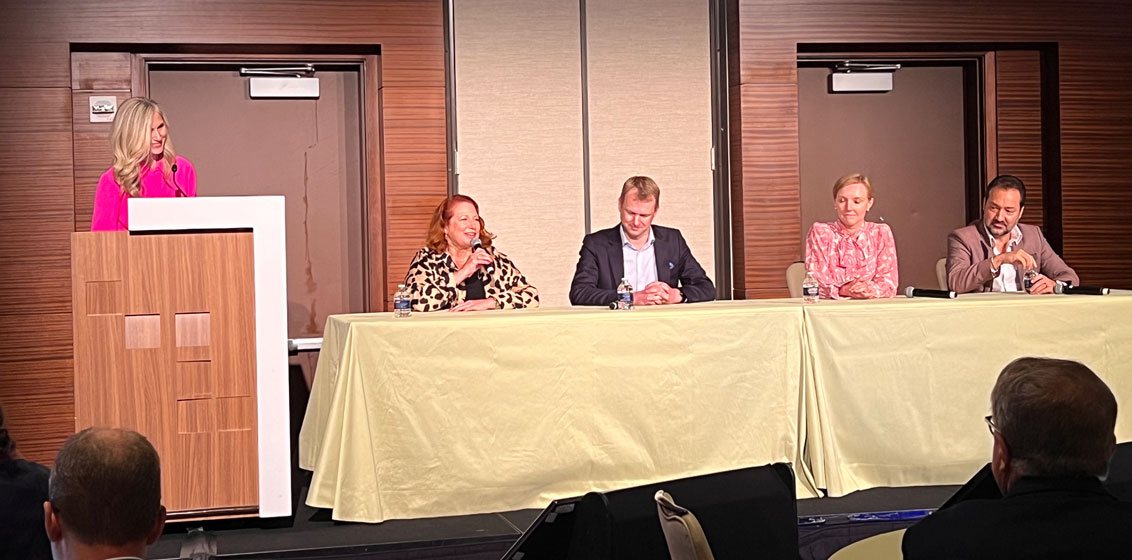
A panel of Virtuoso agency owners and senior executives openly discussed several travel trends and focus areas they are currently witnessing in the luxury travel market with media at Virtuoso Travel Week in Las Vegas last week.
Moderated by Misty Belles, Virtuoso’s VP Global Public Relations, the assembled panel comprised four owner/advisors who represented a mix of agencies and locations from around the world, to provide a wide cross-section of clientele and travel perspectives.
The panel included: Cathy Holler, President & CEO of Momenti Travel in Canada; Roland Howlett, Director of Frontier Travel in Australia; Carolyn Anderson, Head of Product, Black Tomato in the UK; and Fernando Gonzalez, Co-Owner/Founder of F1rst in Service Travel which has offices in the US, Canada, Spain and Colombia.
Subscribe to LATTE’s free eNewsletter to keep up to date with everything in the luxury travel industry.
Belles quizzed the group of travel experts on topics which LATTE has consolidated below under each heading, and some the responses from the panel are paraphrased below to provide an overview, while some quotes are supplied in full for greater insight.
How is business for 2024 versus 2023, business growing?
Holler: Business has doubled, partially because of momentum post-COVID, all of our business is referral-based. We’re seeing a lot of high, high-end last minute bookings. It’s not slowed down. We do a lot of business in safari. Right now “Africa is going crazy”.
Howlett: Business is up, a combination of growth through new advisors and new business. Booking values have stayed around the same, but many are travelling more regularly, and referrals are growing.
Anderson: We’re up 15-16%. Post-COVID the team experienced a huge increase in volume and demand which was emotionally stressful, but this year I think we are at a much happier level of everyone achieving a work/life balance and professional satisfaction which was lacking right after the pandemic.
Gonzalez: Pretty consistent. Halfway through 2023 the company had doubled pre-pandemic numbers. Half way through 2024 we are still seeing double digit growth. Having different verticals and focused on different areas of travel, each of the verticals are growing and are leaning towards experiences. On the travel management side and touring side, “it’s all about experiences, and leisure seems to be on everyone’s mind”.
Are rates deterring people for travelling?
Gonzalez: We are not seeing a slowing. We continue to see growth.
Anderson: It depends on the client and the brief. Some clients might come to us for Italy and maybe we are recommending other destinations like Slovenia and Croatia instead, not just because of the rates but availability “which can be challenging at certain places and times”.
On the other hand there are others who will pay whatever it costs to go to the best hotels in the world.
Holler: It depends on the market but there is “sticker shock” in a lot of destinations, Italy the most prevalent. “People are surprised when they compare the price to 10 years ago. There’s been a lot of shift in people that traditionally booked 5-star hotels shifting to 4-star to go where they want to go, but they’ll lower their expectations.”
Other clients will return from a destination and say its “way overpriced for what I thought it was” but after we’ve discussed what their emotional attachment is to that trip they get over the sticker shock.
What destinations are softening, or are clients transitioning from one to the other?
Howlett: I think Italy is definitely softening and some of that would be price shock. People have been exploring the secondary alternatives like Corsica, Sardinia and Sicily now the ‘White Lotus effect’ is off the radar. We haven’t seen Japan softening while Southeast Asia hasn’t bounced back yet.
Holler: I’d never had a request for Sardinia before and this year I’ve had three, in favour of Sicily. In Africa, we’re starting to see Zambia coming up on the radar. It’s never been high profile but when you look at Botswana being so expensive, now Zambia is popping up as an alternative, at least for North Americans.
Differences in how they are travelling now?
Holler: “One of the trends we’ve noticed is the desire to slow down. Looking at destinations more deeply than they have before.
“The typical American’s safari was 2 nights, 2 nights, 2 nights, whereas now its 4 nights, 4 nights, 4 nights. There’s a lengthening of experience and desire to engage with the culture, engage with a cause, a focus on sustainability, or community, or conservation. I did not have that coming up in conversation before without prompting it – conservation is now coming up in the conversation.
A more emotional attachment and emotional connection. And its not just Africa, it’s in Europe too, it’s wherever they can feel they will have more authentic interactions with the destination, where it’s going to touch them in a deeper way.
Anderson: Our length of stay has remained the same in terms on an overall trip. Normally our trips are about 12 nights, and before it would have been an average of four stops, but now its closer to three stops – and I suspect that in part driven by the advise of their advisors. People doing fewer stops is consistent feedback. Guests acknowledging they were too ambitions in using their time and felt a bit rushed.
People say they are going all this way and they don’t want to miss out, but that’s always the trick to make sure you don’t canabalise the whole benefit of the trip by putting too much into it.
Belles: “You want to avoid that feeling of needing a vacation after the vacation.”
Holler: The biggest shift I have seen across our verticals is group travel, even on the corporate side. There’s a desire for companies to gather all their executives together, gather their top clients, and even for the multi-gen market – that is the biggest shift we’ve seen. “There is a need and desire to be with other people, to relate.”
Anderson: Hopefully the group dynamic of travel will be a forever legacy, that we recognise how important it is to take advantage of the opportunity to be together as a a family group, as friends. We launched a service called ‘See you in the moment’ which is designed around creating special moments for a group to remember together.
What observations are you seeing in family travel, niches?
Anderson: “It’s gone beyond multi-gen families to multiple families for very extended families.” And there are some very interesting family groups. We’ll have divorced parents who are travelling with their new spouses, children, grandparents, caregivers. It’s always interesting to do the debriefings with hotels about who needs to be in which room!
Holler: Changing dynamics of families, working with both parents and juggling scheduling and who goes with which parents, where and when. Then you’ve got the teenager bringing along a girlfriend. “It consistently comes back to that legacy about we lost that time during COVID to be together and how we don’t want to miss this time any longer.”
Family trips used to be just once, but now it seems to be every year they want a family holiday.
What’s popular in cruising?
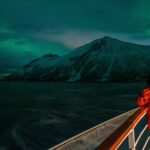
Howlett: Antarctic and expedition – those two areas. Exploring the alternative, moving slower, moving more sustainably and engaging with communities. That’s in the same space as expedition cruising. And for Antarctica, there really aren’t many other ways to do that.
“Antarctica has been really big and people are now returning to having experienced an expedition cruise there before. Which then leads to Greenland or Iceland or Arctic. Similarly with the Kimberley region of Australia, and then those clients are exploring eastern Indonesia, Papua New Guinea and Borneo – for an active traveller, expedition cruising is an incredible way to travel, and for us, there’s been very strong growth.”
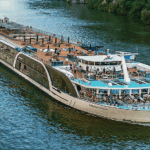
Gonzalez: We sold virtually no cruise prior to the pandemic, and now that is the fastest growing area in our agency, across all our major market (in Mexico, Spain or Canada). The growth lends itself to group travel with friends and family groups – cruising offers better exchanges with multi-gen and friends as everyone is somewhat contained on a ship. It allows you to squeeze in more destinations, to see more in a shorter time.
“In the past years, the level of cruising that we are seeing now didn’t exist. I think it’s becoming a lot more interesting to some of our top clients. A result of the new product that is out there. Every major luxury player out there is launching a yacht, or a boat or some sort of very high-end experience.”
Is solo travel still coming up?
Holler: We tend to find a lot of solo travellers are pairing up with another solo, but still have their own room, but want to travel with a friend. Some are very intrepid or going to exotic destinations on their own.
Anderson: Repeat travellers are doing a combination of solo travel and then joining friends. One client is doing a hiking trip with a group of friends this year and is also doing a solo gorilla trek in Rwanda… wanting to focus on their own schedule.
“For some people its not necessarily because they don’t have someone to travel with, it’s travelling alone because you want the experience of doing everything on your own schedule, by yourself and focusing on you rather than keeping the group happy.”
Sustainability and travel
Belles: “How is sustainability factoring into how your clients are travelling? Is it a lead in to the conversation, is it part of the conversation or is it something that you incorporate in?”
Holler: It’s not commonly coming from the client, but rather part of our consultation. We’re trying to get into their brain and into their heart and understanding what drives them to travel, what are their emotional triggers. We also look at our supplier portfolio and try to lean as much as possible on those that are sustainable.
“Our clients are looking to us for guidance. We are advisors and that’s what we are there for, and so I’m going to navigate the conversation around what’s meaningful for them, any my goal is in most cases, to drive them into the properties and the services and experiences that will give that sustainability aspect to their trip, and also integrating that with community and with culture because they are all tied to sustainability. In Africa, that’s all very easy to do.”
Howlett: “Similarly, people don’t come asking about it. I think its going to be an expectation. People will not have it during the decision making process so much but when they’re inexperienced they’re going to judge suppliers and partners on how they deliver sustainability.”
Fernando: I think its changed significantly. The travellers were asking or requesting for more sustainable properties and nowadays it’s expected. I think its the responsibility of our partners and our advisors to make sure that wherever the client is going, that it has sustainable elements because otherwise then it’s a problem. If it’s not there, then we hear about it.
Thoughts on technology an AI
Fernando: It’s a huge opportunity. “Our business has changed tremendously, the processes, complying, logistics, it’s all a little more complex so we need to enhance our processes, we need to be able to centralise our databases, we need to have more readily accessible, accurate information for our advisors so that they can best understand and recommend for a particular client. I think it will be a huge, huge help for us.”
Anderson: “As a team, and its true for all of us, we have so much knowledge within us, and i think one of our frustrations is that we don’t have an efficient way of capturing that and accessing it from everyone’s brain all the time.
“We definitely see A.I. as an opportunity to help us do that and to be able to trawl through all our many presentations and notes and downloads from our research trips over the years, to be able to analyse what is going to be best for our individual clients. That’s something we’re really focused on.”
What trends are you seeing right now, and which do you hope will go away?
Holler: Trend now: “The last-minute nature of really high-end bookings, where the consumer is automatically assuming everything is available when they want it – which is a trend I hope will go away.”
A trend that I am seeing a little bit more is longer-term planning for big trips. I would love to see more of them. The challenge that we have, using Japan as an example, is that people think ‘we’ll go book Japan now for travel in two months time‘. But we have ‘stopsells’ with suppliers in Japan right now due to demand. Even though there’s hotel rooms, we can’t get guides and drivers that speak English and so we need to be making our clients aware that they need to book well in advance.
Howlett: Current trend: Is exploring the alternatives, whether that secondary cities or secondary locations or countries.
“What I would like to go away is the market in general’s obsession with price. Particularly in Australia there’s some large package companies in the trade, in the luxury space and using the ‘luxury’ word, which is driving the position of the price.”
Anderson: “In terms of exciting trends, extended season and shoulder season travel. I think its the Italian Tourist Board that uses the term ‘Community Conscious travel’, travelling at times when destinations aren’t at overcapacity due to visitors. I get really excited when I see bookings for Venice in December, not only for the hotels but for the clients who are going to have a better experience than they would in August, in the heat and crowds.”
I agree with the last-minute booking trend also. The other trend I’ll really love to see go away is chasing the Insta versus Reality idea of a destination.
Fernando: Current trend: Group movement travel, be it business, family or friends. “It shifted the dynamic of our company.
To go away: Spontaneity, leading into last minute trips. It’s more complicated.
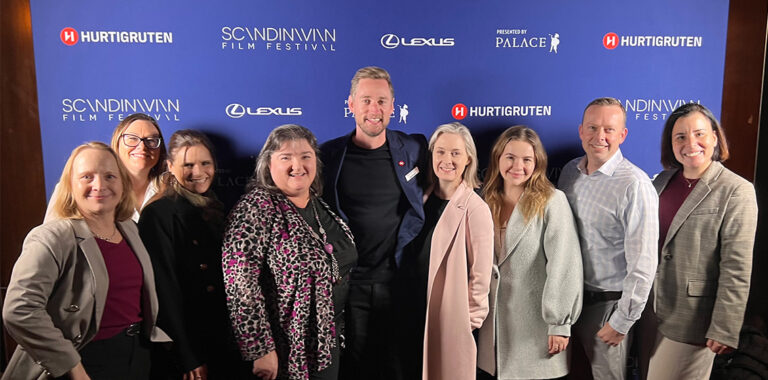
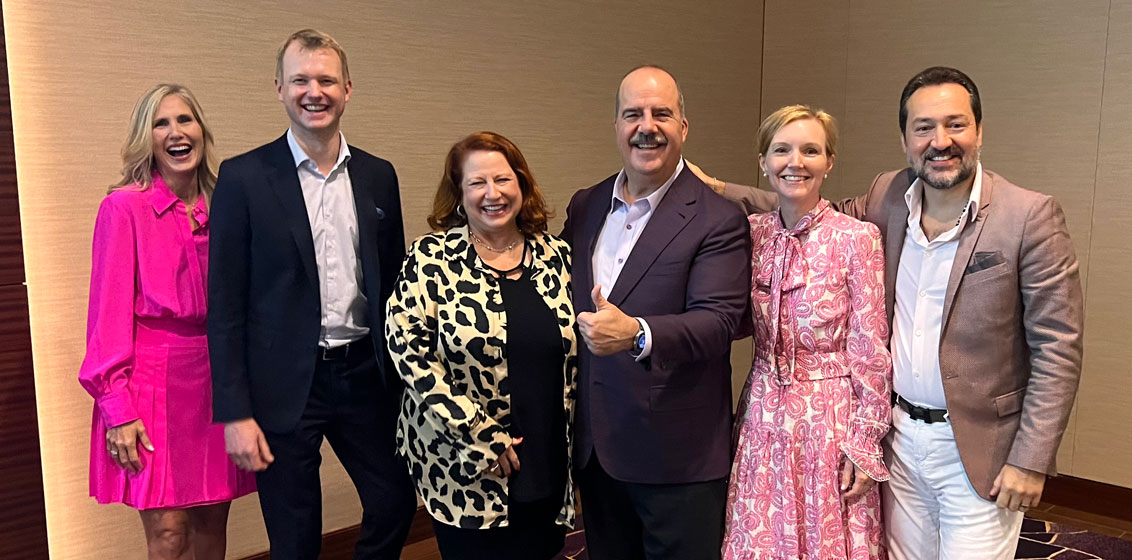
Lead image: Virtuoso’s 2024 Panel Discussion travel advisors – from left are Misty Belles, VP Global Public Relations; Roland Howlett, Frontier Travel; Cathy Holler, Momenti Travel; Matthew Upchurch, CEO, Virtuoso; Carolyn Addison, Black Tomato and Fernando Gonzalez, F1srt in Service.
LATTE travelled to Virtuoso Travel Week as a guest of Virtuoso.