
The Australian Federal Court today ordered Qantas to pay $100 million in penalties for misleading consumers by offering and selling tickets for flights it had already cancelled, and failing to inform existing ticketholders promptly of its decision. The Australian Competition & Consumer Commission prompted the case against Qantas earlier this year.
The competition watchdog said the penalties were imposed after Qantas admitted to contravening the Australian Consumer Law (ACL), agreeing that the $100 million fine was appropriate to deter it and other businesses from breaching the ACL going forward, while recognising that the flag carrier was cooperating with the ACCC to resolve the proceedings.
“This is a substantial penalty, which sets a strong signal to all businesses, big or small, that they will face serious consequences if they mislead their customers,” said Gina Cass-Gottlieb, ACCC Chair.
Subscribe to LATTE’s free eNewsletter to keep up to date with everything in the luxury travel industry.
In addition to these penalties, on 5 May 2024 Qantas gave an undertaking to the ACCC that it would pay about $20 million to consumers who purchased tickets on flights that Qantas had already decided to cancel, or in some cases who were re-accommodated on those flights after their original flights were cancelled. These payments are on top of any remedies these consumers already received from Qantas, such as alternative flights or refunds. Consumers are encouraged to follow the steps outlined below to check if they are eligible for a payment.
“We all know the inconvenience of cancelled flights. When this happens, consumers need to know about the cancellation as soon as possible, so they can work out alternative arrangements which suit them.”
“Up to about 880,000 consumers were affected by Qantas’ conduct. People had made plans, and may have spent money on other related purchases, relying on the fact that the flight would depart as advertised. And the delay in notifying them of the cancellation may have made it more stressful and costly to make alternative arrangements,” Cass-Gottlieb said.
Qantas admitted that senior managers responsible for different aspects of Qantas’ systems and operations between them knew that cancelled flights were not immediately removed from sale; that some consumers booked tickets for flights that had already been cancelled; that existing ticketholders were not immediately notified; and that the ‘Manage Booking’ pages were not promptly updated when flights were cancelled.
The airline admitted that it benefited from the conduct by obtaining revenue from consumers who may have chosen a cheaper Qantas flight or a flight with another carrier had they known their chosen flight had already been cancelled. Qantas also benefited by retaining revenue from consumers who were less likely to change carrier when they were eventually notified their flight had been cancelled. In addition, by delaying fixing its systems, Qantas saved the costs of doing so at an earlier point in time.
Qantas misled the public about more than 82,000 flights which were scheduled to depart between May 2022 and May 2024.
Qantas breached the law in two ways: 1) it continued to offer and sell tickets for flights for two or more days after it had decided to cancel those flights; and 2), Qantas continued to display flight details on the ‘Manage Booking’ page of existing ticketholders for two or more days after it had decided to cancel the relevant flight with no indication that Qantas had decided to cancel that flight. Qantas also did not otherwise notify consumers that their flight had been cancelled.
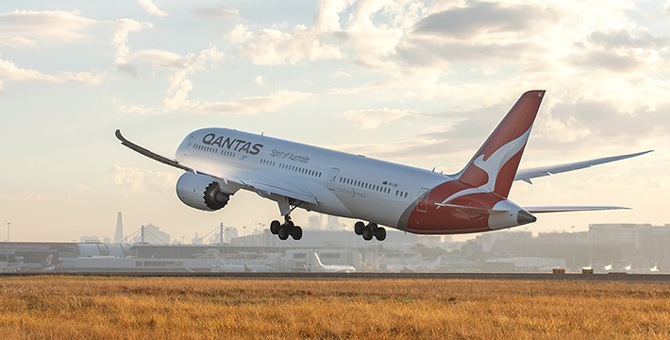
Qantas continued to offer tickets for sale to tens of thousands of domestic and international flights for two or more days after it had decided to cancel those flights and sold tickets to consumers on some of those flights. This affected:
- 70,543 flights (69,237 domestic and trans-Tasman flights, and 1,306 international flights).
- 86,597 consumers who made bookings on, or were re-accommodated to, a flight that had already been cancelled (81,238 of those consumers made a booking on a domestic or trans-Tasman flight and 5,359 made a booking on an international flight).
- On average, tickets for these cancelled flights were offered for sale for about 11 days after cancellation, and in some cases, for up to 62 days after cancellation.
Qantas also continued to display details for flights on the ‘Manage Booking’ page of ticketholders for two or more days after Qantas had decided to cancel the flight with no indication that Qantas had already decided to cancel the flight. This affected:
- 60,297 flights (57,274 domestic/trans-Tasman and 3,023 international)
- 883,977 consumers (806,406 had bookings on a domestic/trans-Tasman flight and 77,571 held bookings on an international flight).
- On average, it took Qantas about 11 days for ticketholders to be notified of the cancellation of their flight. In some cases, this took up to 67 days.
Consumers who made a booking (or were reaccommodated) on a flight two or more days after a decision had already been made to cancel that flight are eligible to receive payments of $225 for domestic/trans-Tasman passengers or $450 for international passengers. These payments are in addition to any remedies consumers already received from Qantas, such as alternative flights or refunds.
The payments are being made in accordance with a court-enforceable undertaking Qantas gave to the ACCC, which requires it to establish a consumer remediation program.
Qantas has contacted the majority of eligible consumers on or before 10 July 2024. Consumers have until 6 May 2025 to submit their claim for a payment through the Qantas Customer Remediation Program. All payments to eligible consumers must be made within 60 days of payment information being provided by the consumer (or a person on their behalf) and acceptance of this information by Qantas/Deloitte.
If the amount paid does not reach $20 million at the conclusion of the remediation program, the residual balance will be donated to a charitable organisation to be approved by the ACCC.
After the start of the proceedings, Qantas made changes to its operating and scheduling systems so that it is no longer engaging in the conduct.
“A large, well-resourced company like Qantas should have had strong operating and compliance programs in place that would have prevented these issues from arising. However, we are pleased that Qantas has made changes to its operating and scheduling, and has undertaken to amend its compliance programs,” Cass-Gottlieb added.
The ACCC acknowledges Qantas’ cooperation in resolving this proceeding at an early stage, and its undertaking to implement a remediation program ahead of the Court hearing to finalise this case.