
With a burst of high profile players set to enter the space, Peruvian river cruise pioneer Delfin Amazon Cruises has adopted a new visual identity that coincides with a website refresh to clearly drive its message home.
At a lunch at Morena in Sydney today, Delfin Co-Founder and CEO Aldo Macchiavello told media that the refresh comes at a crucial time for the river cruise line, which has been operating cruises along two Amazon River tributaries, the Ucayali and Marano Rivers, since 2006 and has since expanded its fleet to three vessels.
Abercombie & Kent’s Pure Amazon riverboat is set to launch this year, also in the Pacaya-Samiria National Reserve which has been Delfin’s home turf since its launch. This will be followed by &Beyond’s Amazon Explorer in 2026, which will also sail from Iquitos.
But even as he takes the necessary steps to prepare for these entries to the market, Macchiavello remains unperturbed by this growing competition.
Subscribe to LATTE Cruise’s free eNewsletter to keep up to date with everything in the luxury cruise space.
“We are pioneers,” he said. “We already have 20 years of operating cruises in the Amazon.”
The revamp also serves to drive home the messaging that Delfin is the only Peruvian-owned river cruise line operating on the Amazon, while the others are multinational players with global, rather than local, expertise.
“We are Peruvian,” Macchiavello stressed, making Delfin the only Peruvian-owned company in the mix, with 100% of its staff from the local area. The fact that it is also family-owned makes its offering even more personal, with Delfin dedicated to delivering a truly Peruvian experience at every turn. “We bring our home to you which nobody else can.”
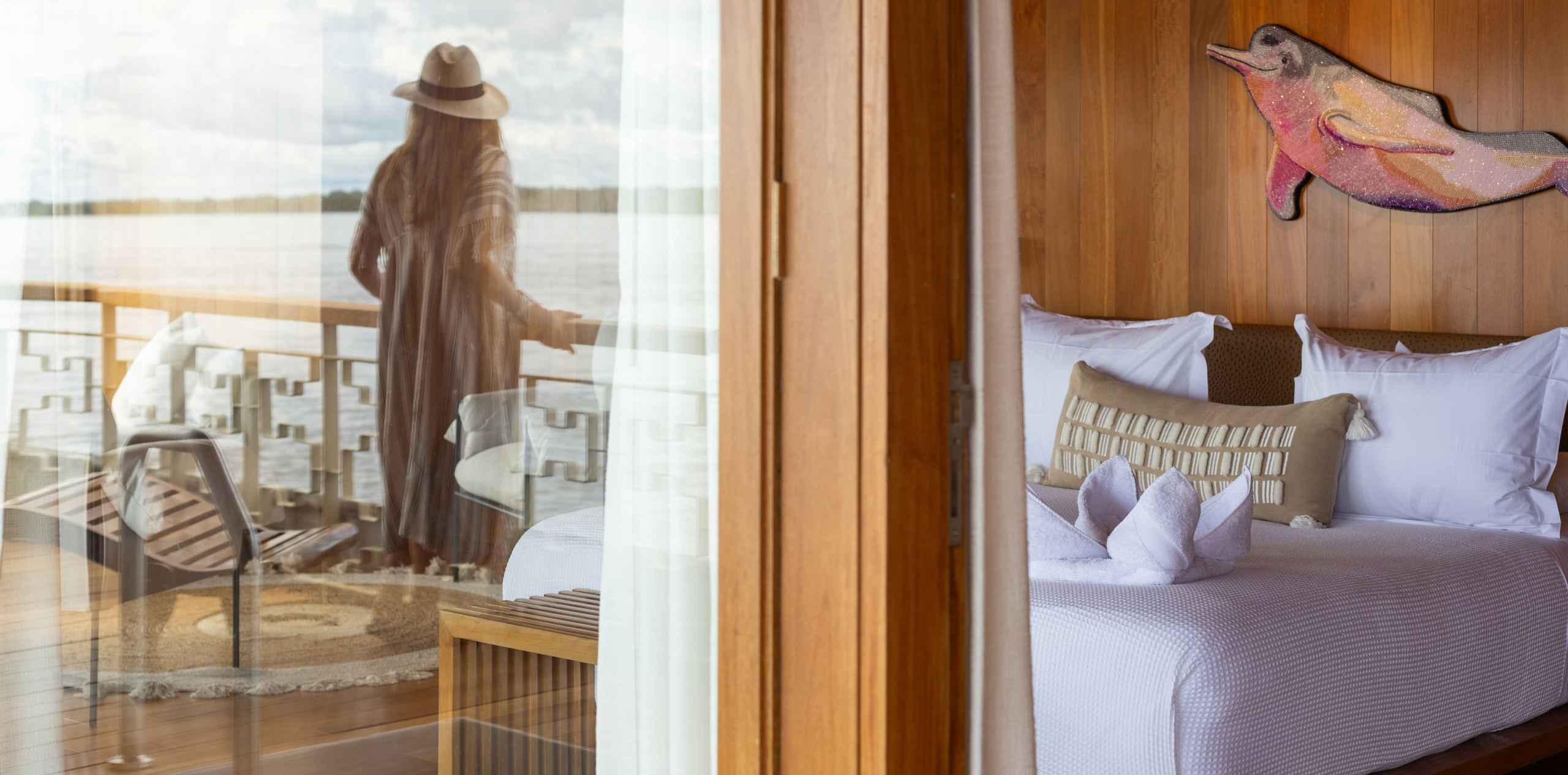
Macchiavello’s wife, Delfin Co-Founder Lissy Urteaga, who oversees the cruise line’s creative direction, visits the company’s vessels at least twice a month to ensure the onboard product is up to scratch and also to speak with customers, gaining valuable feedback in the process.This feedback has helped inform Delfin’s new look with textures and colours from the natural surroundings forming a major pillar of the refresh, like shades of forest green or pink inspired by the river dolphins that are commonly sighted on its cruises. A refined logo inspired by the fluidity of the Amazon River is another feature, along with “evocative storytelling” across all platforms including its new digital home.
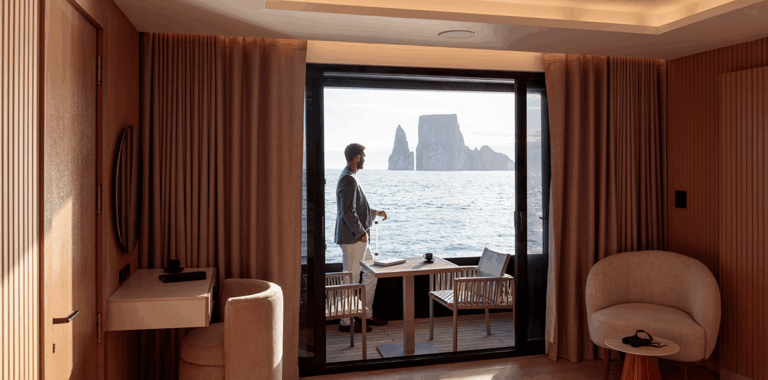
Elements of this refresh are also present throughout Delfin I which was recently totally refurbished. The revamped vessel’s four suites now feature private panoramic terraces, two with whirlpools. Floor-to-ceiling windows showcase the Amazon rainforest and its wildlife. Other enhancements include renovated bathrooms, a newly designed lounge and bar for the top deck and solar panels. The company’s embarkation port is also set to be revitalised.
Now, as Delfin enters this “new chapter”, its deep-rooted connection with the local environment is evident in every aspect of its offering, Macchiavello explained. As well as the décor, it extends from the culinary offering onboard, a huge focus for the cruise line as a member of the Relais & Chateaux network, to the community projects it has helped bring to life. These range from pink dolphin conservation projects to providing economic opportunities for local women by helping them build their craft businesses.
“We have a relationship with the local villages that these other companies cannot really have,” Macchiavello told LATTE. “The villagers are smart. They really appreciate that we have been helping them for 20 years. So it doesn’t matter if somebody comes up with big pockets and starts writing cheques, so to speak. There is a relationship there, and that’s not going to go away.”
Macchiavello’s visit to Australia comes as Delfin works to rebuild its Australian post-pandemic. Pre-pandemic, Australia was its second largest market after the US, he said.