
Mandarin Oriental‘s 14th annual Sustainability Report has been released, with the 2024 report reflecting progress across all environmental and social pillars.
The latest study reinforces the Group’s objective to align its growth with responsible business practices that support guests, colleagues and communities.
With 43 hotels, 12 residences and 26 homes across 27 countries, the Group’s expanding portfolio continues to reflect its promise to deliver exceptional hospitality while addressing the real-world challenges that people and the planet are facing. In 2024, this meant building on measurable goals and long-standing principles and introducing practical innovations where they could make the greatest difference.
Subscribe to LATTE’s free eNewsletter to keep up to date with everything in the luxury travel industry.
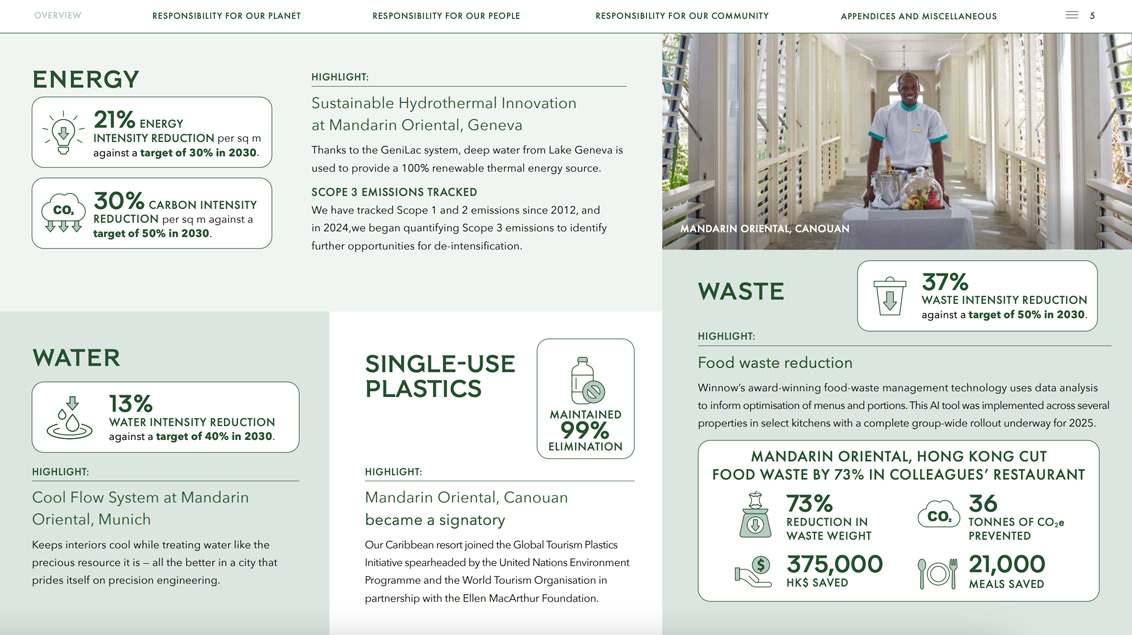
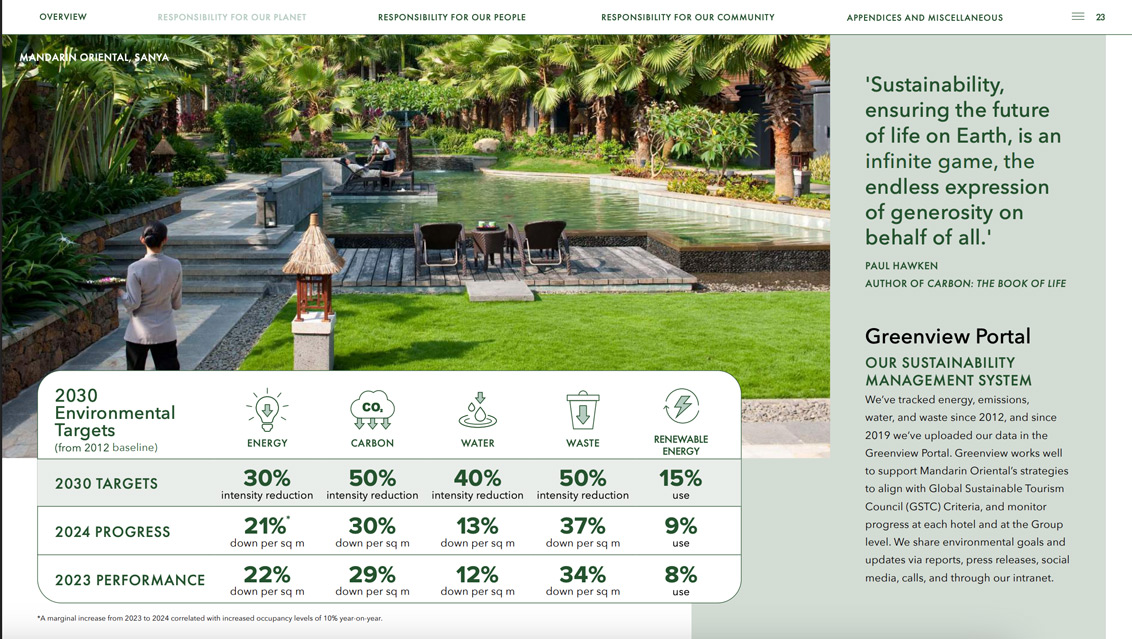
The year saw Mandarin Oriental achieve a 21% reduction in energy intensity and a 30% cut in carbon emissions compared to its 2012 baseline.
In Geneva, deep water from Lake Geneva now powers heating and cooling at Mandarin Oriental, Geneva through the GeniLac system, an elegant example of engineering aligned with the environment. Scope 3 emissions, often the most elusive, are now being tracked for the first time across the Group to help map out future reductions across the supply chain.
In Munich, water conservation found form in a Cool Flow System that regulates building temperature while treating water with the same care the city devotes to its industrial craftsmanship. Across the Group, water use has dropped 13% since 2012.
The Group cut waste intensity by 37% against its 2012 baseline. At Mandarin Oriental, Hong Kong, colleagues helped reduce food waste by 73% in their own colleague restaurant, saving 21,000 meals and avoiding 36 tonnes of carbon emissions annually. Winnow, an AI-based food waste tool, was rolled out to selected kitchens and is set for Group-wide implementation in 2025, while over two-thirds of properties began composting food waste.
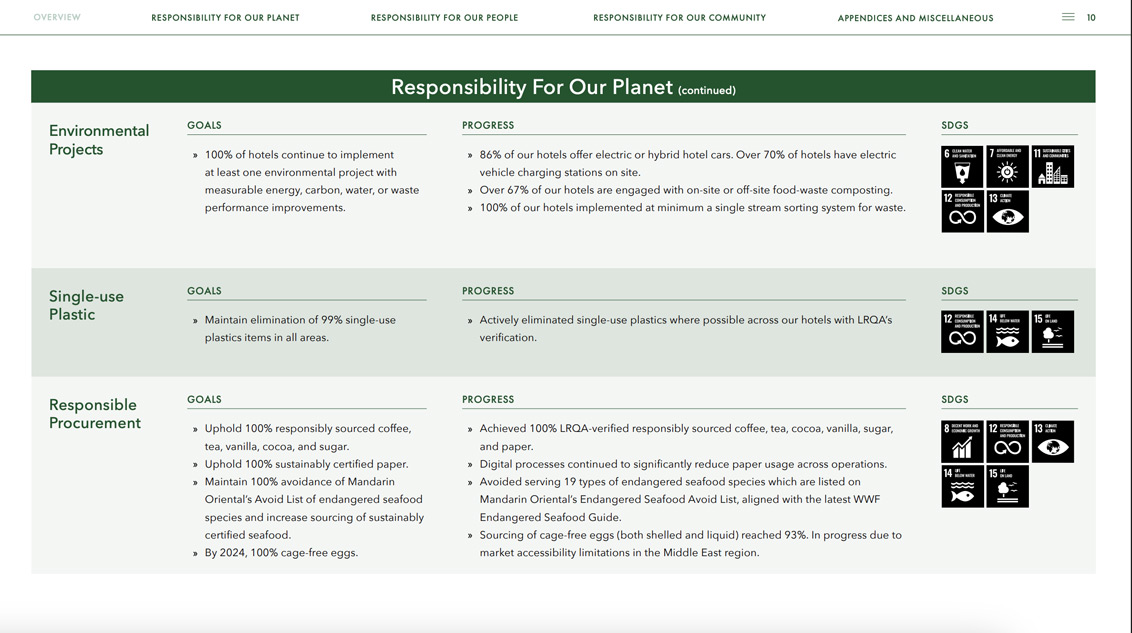
Single-use Plastic has been nearly eradicated across the portfolio, with 99% of single-use plastics removed. In the Caribbean, Mandarin Oriental, Canouan joined the UN-backed Global Tourism Plastics Initiative, highlighting a shared commitment to industry-wide change.
Procurement standards remained stringent. Coffee, tea, cocoa, vanilla, sugar and paper were sourced responsibly, all verified by LRQA. Seafood procurement complied fully with WWF guidance, avoiding all endangered species. Guest feedback aligned with these efforts: over 92% of more than 100,000 guests surveyed expressed satisfaction with the Group’s sustainability practices, an increase from 91% in the previous year.
The report also highlighted the Group’s focus on people. All colleagues completed training in inclusive workplace practices, while 132 earned certification as mental health first aiders. A new initiative, launching in 2025, will support colleague-led Resource Groups, beginning with Women in Mandarin Oriental, to enhance visibility, advocacy and connection.
Community engagement remained strong, with colleagues contributing over 78,000 hours of volunteer time, supported by the Group’s one-day paid volunteering programme. More than 500 charitable initiatives were supported globally, alongside over US$520,000 in cash and in-kind donations.
“Sustainability at Mandarin Oriental is not a separate pursuit but integral to how we grow, how we lead, and how we serve,” remarked Laurent Kleitman, Group Chief Executive of Mandarin Oriental. “It reflects the choices we make each day, from the design of our buildings to the way we support our people and engage with communities.
“This report speaks to progress that is both considered and collective—built by many, and with purpose.”
View the report in its entirety here.